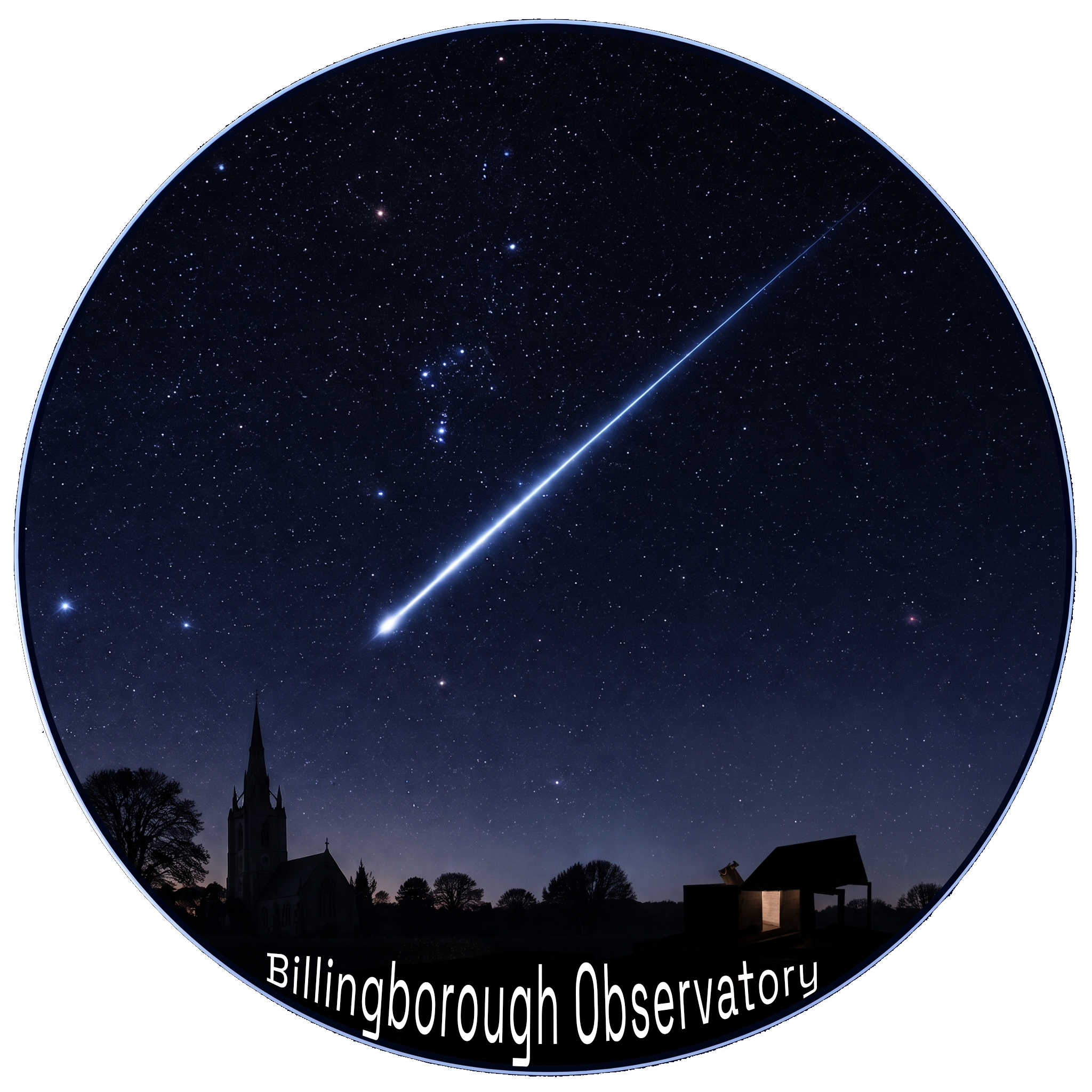
Understanding the AllSky Camera
How does a camera see the whole sky? Discover how our AllSky camera works and how its images can reveal clouds, stars, meteors and the changing conditions above the observatory.
Explore the AllSky camera →LEARN & EXPLORE
Astronomy begins with looking up. Explore how we observe the sky, how our equipment works, and what we can learn from the observations made at Billingborough Observatory.
ASTRONOMY FROM BILLINGBOROUGH
The night sky is full of things to discover. These guides explain some of the observations, instruments and techniques used at Billingborough Observatory, using real observations wherever possible.
How does a camera see the whole sky? Discover how our AllSky camera works and how its images can reveal clouds, stars, meteors and the changing conditions above the observatory.
Explore the AllSky camera →Find out how our automated meteor cameras record meteors and how observations from Billingborough contribute to the wider Global Meteor Network.
Explore meteor detection →Why do stars appear to move across the sky? Learn how Earth's rotation creates star trails and what these trails can tell us about the night sky.
Explore star trails →A keogram transforms a night's observations into a visual timeline. Discover how they are produced and what they can reveal about changing conditions throughout the night.
Explore keograms →Learn how astronomers describe positions in the sky using the horizon, altitude, azimuth and celestial coordinates.
Explore the sky →OBSERVE • QUESTION • DISCOVER
Many of the examples used throughout these pages come directly from the cameras and telescopes operating at Billingborough Observatory. As the observatory develops, this section will grow alongside it.